Recovering from a stroke is a journey that requires patience, resilience, and the right support system. For many survivors, one of the most frustrating hurdles is the sudden loss of the ability to communicate. Whether it’s struggling to find the right words or difficulty physically forming sounds, communication challenges can feel isolating for both the survivor and their loved ones.
In the past, speech therapy for stroke patients required frequent, often exhausting trips to a clinic. Today, virtual speech therapy is changing the landscape of recovery, offering a powerful way to rebuild communication skills from the comfort of home.
Discover how virtual speech therapy provides a scientifically-backed, stress-free way for stroke survivors to regain their voice and independence from home.
A stroke occurs when blood flow to the brain is interrupted, damaging the areas responsible for processing and producing language. Depending on which part of the brain is affected, survivors may experience different types of communication disorders:
A Speech-Language Pathologist (SLP) is a vital partner in the recovery process. They don’t just "fix" speech; they help rebuild the neural pathways required for communication.
The primary goals of speech recovery after stroke include:
The short answer is yes. Extensive clinical research has shown that telehealth outcomes for stroke recovery are often comparable to traditional in-person visits. The brain’s ability to rewire itself, known as neuroplasticity, depends on the quality and frequency of the exercises, not the physical location of the therapist.
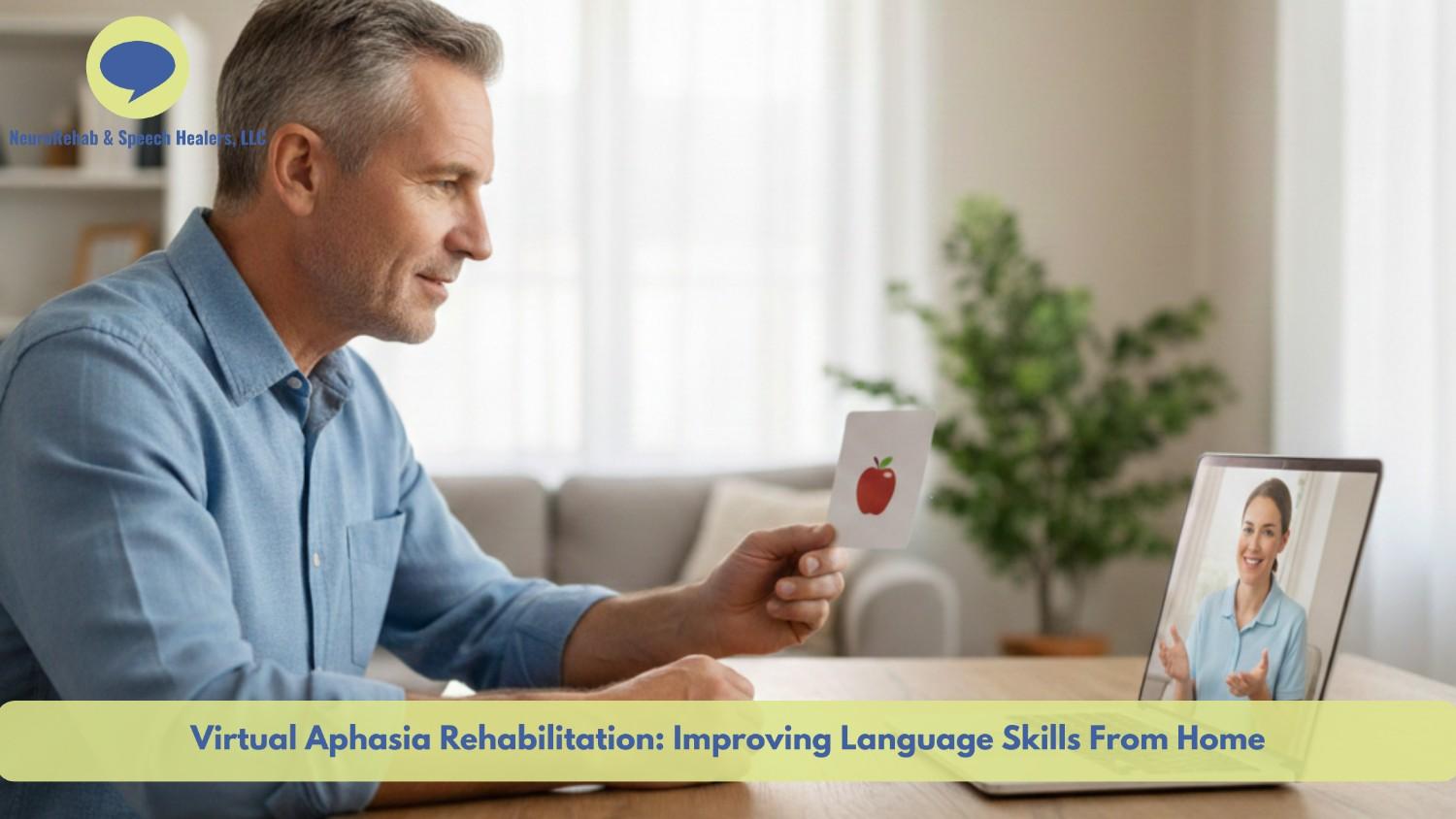
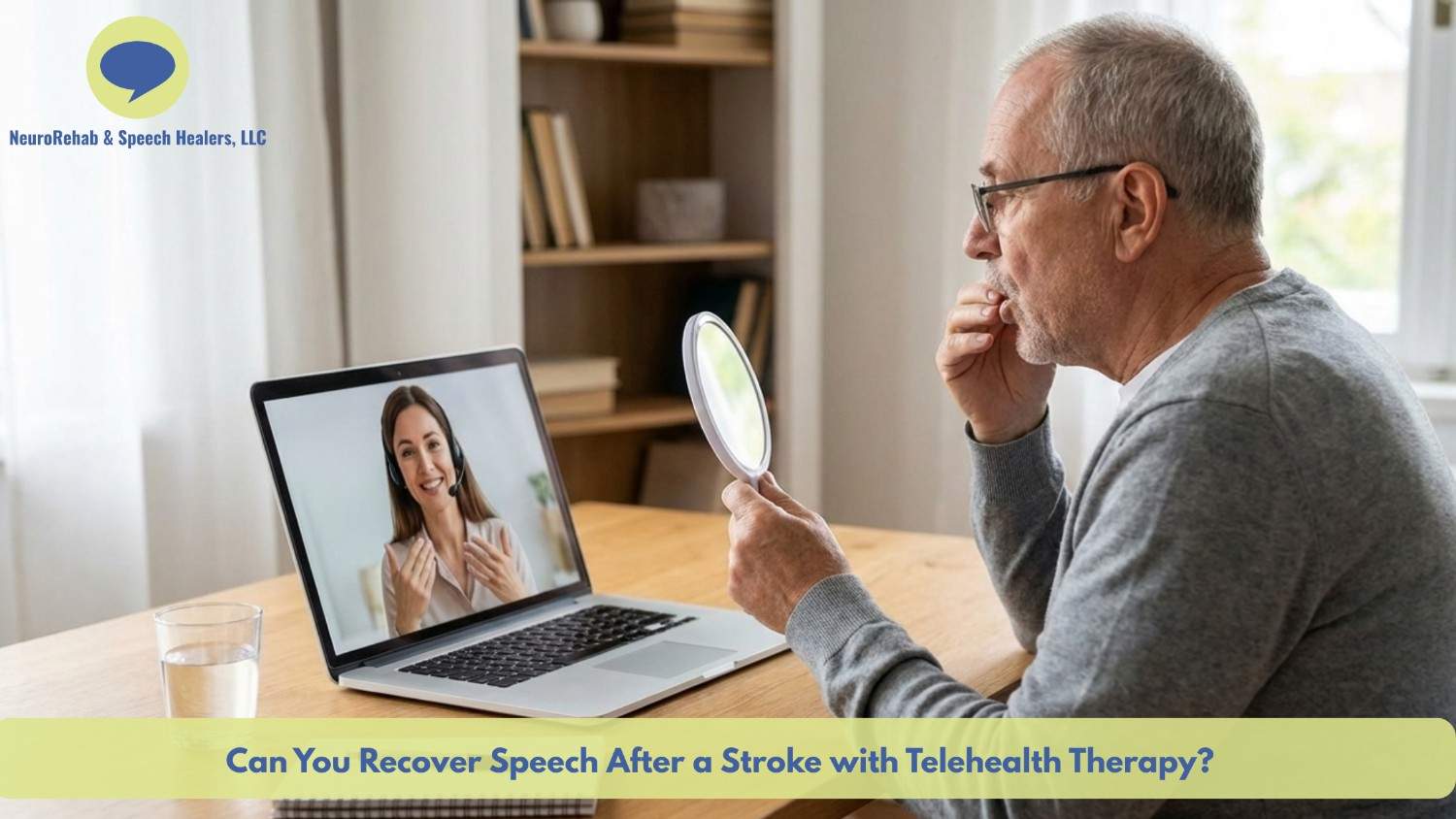
A typical session involves a secure, one-on-one video call with a licensed SLP. Using screen-sharing tools, the therapist can display visual aids, word-finding games, and interactive exercises. We provide real-time feedback on your mouth positioning and vocal clarity just as they would across a table.
You don’t need to be a tech expert to succeed. A simple tablet, laptop, or computer with a webcam and stable internet is all it takes. Most platforms are "one-click" join, and many providers offer a technical orientation to ensure you feel confident before your first session.
While sessions with an SLP are crucial, how to improve speech after a stroke often comes down to what happens between appointments.
Virtual care offers several advantages for stroke survivors:
These benefits make telehealth a practical and sustainable option for long-term recovery.
Telehealth speech therapy is often suitable for:
A professional evaluation helps determine whether virtual therapy is the right fit.
Telehealth is highly effective for many stroke survivors, particularly when communication challenges are manageable through virtual interaction. However, in-clinic therapy may be recommended for individuals with severe impairments, complex medical needs, or swallowing difficulties requiring hands-on support.
A speech-language pathologist can guide patients toward the most appropriate care approach, or a combination of both.
The process typically includes:
Early intervention and consistent therapy play a vital role in long-term outcomes.
Recovering speech after a stroke takes time, patience, and the right support. With expert guidance, consistent practice, and personalized care, meaningful progress is possible. Virtual speech therapy makes high-quality treatment accessible from home, empowering stroke survivors to rebuild communication skills, regain confidence, and reconnect with loved ones, one step, one word, and one conversation at a time.
Speech changes after a stroke can feel overwhelming, but recovery is possible with the right support. NeuroRehab & Speech Healers provides specialized virtual speech therapy for stroke survivors across New York and New Jersey, focused on rebuilding real-life communication skills at your pace, from the comfort of home.
Start your recovery today, reach out to us or call (732) 743-8383 and take the first step toward clearer speech.
Speech therapy often begins as soon as the patient is medically stable, helping stimulate recovery early and support communication improvements during the brain’s most active healing phase.
Speech recovery varies widely, with noticeable improvements often occurring within months, while continued therapy can support progress over a year or longer.
Virtual speech therapy supports aphasia recovery by targeting language skills, conversation practice, and functional communication through evidence-based techniques delivered in real-life settings.
Therapists provide simple setup guidance, use user-friendly platforms, and involve caregivers when needed to ensure sessions remain accessible and stress-free.
Caregivers and family members can join sessions to learn communication strategies, support daily practice, and reinforce therapy goals beyond scheduled appointments.