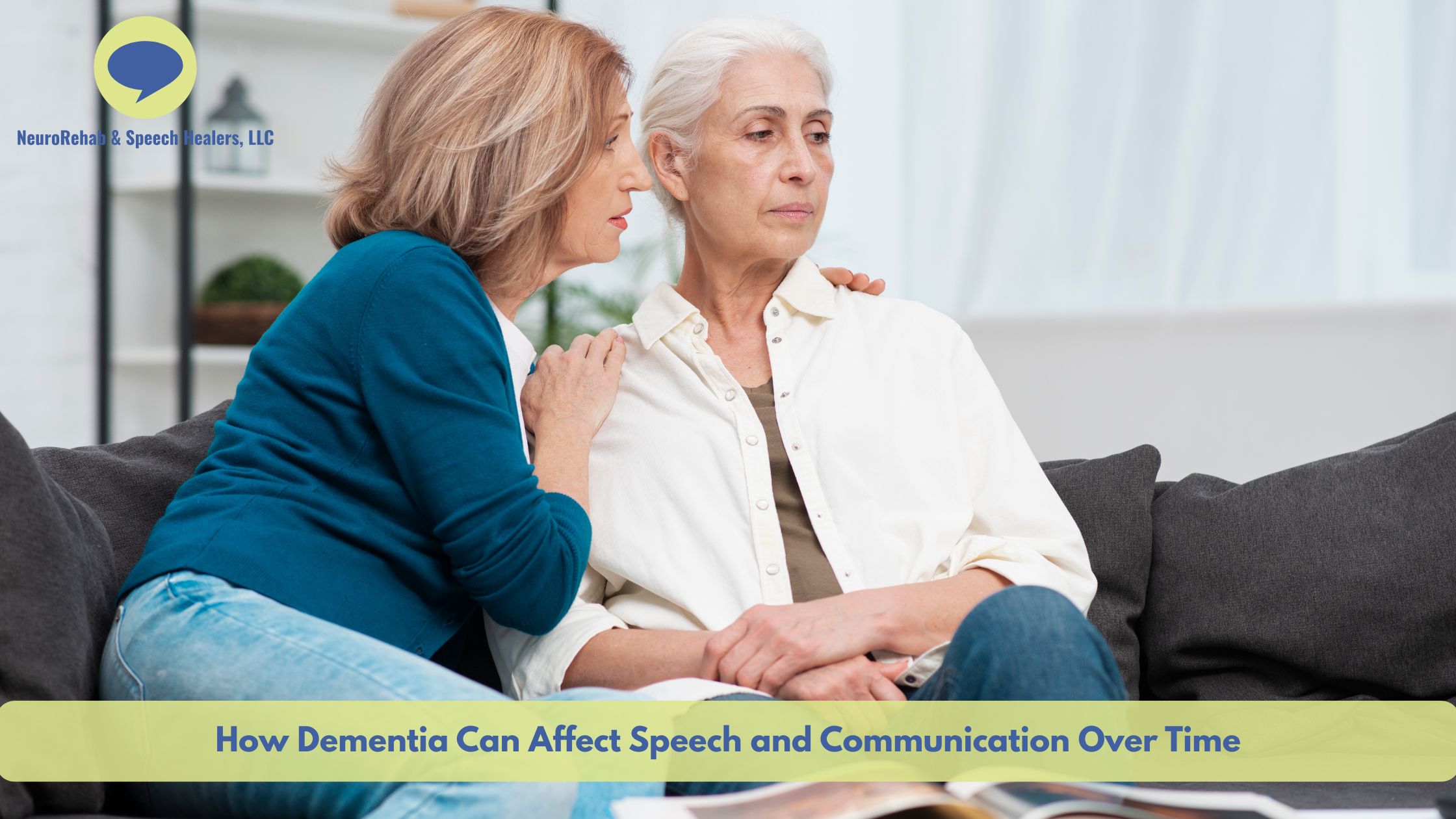
Dementia is a progressive neurological condition that goes far beyond memory loss, it fundamentally changes how a person connects through language. As the condition advances, noticeable communication changes in dementia make it increasingly difficult for individuals to find words, understand others, or join daily conversations. These emerging language barriers can be deeply frustrating for both patients and families.
Recognizing this progression fosters patience and empathy in caregivers and underscores the importance of early intervention, including specialized speech therapy for dementia patients.
Dementia damages brain cells and disrupts the neural networks responsible for memory, language, and executive functioning. Areas commonly affected include the temporal and frontal lobes, which are essential for:
Word retrieval
Sentence formation
Understanding spoken language
Organizing thoughts
As these regions deteriorate, dementia and speech problems become increasingly noticeable in daily interactions.
Different forms of dementia affect communication in unique ways:
Alzheimer’s disease: Gradual word-finding difficulties and reduced comprehension
Frontotemporal dementia: Early and significant changes in speech, behavior, and language structure
Vascular dementia: Slower processing and difficulty organizing thoughts mid-conversation
Dementia is progressive, meaning symptoms worsen over time. Communication depends on a combination of memory, attention, and language processing, all of which are gradually impaired. As these systems decline, individuals may struggle more with expressing themselves and understanding others.
Communication difficulties vary by individual, but several patterns are commonly observed.
One of the earliest signs is word-finding difficulty, where individuals:
Pause frequently during speech
Struggle to name familiar objects or people
Substitute words like “thing” or “stuff”
This can lead to frustration and withdrawal from conversations.
Repetition happens due to short-term memory impairment. A person may:
Ask the same question multiple times
Retell the same story repeatedly
Forget that a conversation already occurred
While repetitive, this behavior is not intentional, it reflects memory loss, not disengagement.
As dementia progresses, understanding spoken language becomes harder. Individuals may:
Struggle in group conversations
Get overwhelmed in noisy environments
Miss parts of sentences or instructions
Speech often becomes simpler over time:
Shorter sentences
Limited vocabulary
Reliance on familiar phrases
This reflects reduced cognitive processing rather than loss of intelligence.
Families often notice early speech-related changes before a formal diagnosis is made.
Processing delays are common. Individuals may take longer to respond because their brains require more time to interpret and retrieve language.
This may include:
Mixing up names or words
Losing track of thoughts mid-sentence
Starting a sentence and forgetting how to finish it
These breakdowns can make conversations feel fragmented or confusing.
Speech may also become physically altered:
Softer or weaker voice
Reduced articulation clarity
Monotone or less expressive speech
Dementia can also affect literacy skills:
Difficulty understanding written instructions
Forgetting familiar written words
Trouble composing messages or notes
Mild word-finding issues
Occasional confusion in conversations
Subtle communication changes
More frequent repetition
Difficulty understanding longer sentences
Increased reliance on caregivers for communication support
Limited verbal communication
Increased use of gestures, facial expressions, and nonverbal cues
Difficulty expressing basic needs or emotions
At this stage, emotional connection often becomes more important than verbal interaction.
Effective communication strategies can significantly improve daily interactions and reduce frustration.
Use short, direct sentences
Ask one question or give one instruction at a time
Avoid complex explanations
Processing takes longer, so patience is essential. Avoid interrupting or finishing sentences prematurely.
Turn off background noise like TV or radio
Maintain eye contact
Choose calm environments for conversation
Point to objects when speaking
Use pictures or written reminders
Demonstrate actions when giving instructions
Even when language declines, emotional understanding often remains strong. Reassurance, tone of voice, and facial expressions can communicate more than words.
Yes, speech therapy plays an important role in supporting communication and quality of life.
Speech-language pathologists assess:
Communication strengths and challenges
Cognitive-linguistic abilities
Swallowing and related functions
They then design personalized strategies to maintain communication for as long as possible.
Supports remaining language abilities
Teaches compensatory communication strategies
Helps caregivers improve interaction techniques
Encourages participation in daily activities
Early intervention is most effective. Consider consultation when:
Communication changes begin affecting daily life
Misunderstandings become frequent
Social withdrawal increases due to speech difficulty
Support from a specialist can help families develop structured communication strategies and preserve meaningful interaction.
Encourage conversation without pressure
Celebrate small successes in communication
Avoid correcting every mistake
Communication breakdowns can be emotionally difficult. Staying calm, slowing down, and using reassurance can reduce tension.
Even when speech declines, connection remains possible through:
Music and singing
Looking at photos together
Reminiscing about familiar memories
Simple shared activities
Seek professional evaluation if you notice:
Sudden or rapid worsening of speech
Confusion accompanied by safety risks
Difficulty swallowing along with speech decline
Significant disorientation affecting daily function
These changes may require immediate medical attention and a structured care plan.
Although dementia can gradually affect speech and communication, meaningful connections remain possible. Recognizing changes early and using supportive communication strategies can reduce frustration and improve daily interactions. With the right support from caregivers and speech-language pathologists, individuals living with dementia can stay engaged, express themselves more effectively, and maintain important relationships throughout their journey.
Communication changes caused by dementia can make everyday conversations more challenging, affecting both individuals and their loved ones. At NeuroRehab & Speech Therapy, our specialized telehealth services help patients maintain communication skills, improve daily interactions, and navigate changes with confidence and support.
Through personalized speech therapy and practical caregiver guidance, we focus on preserving meaningful connections and enhancing quality of life at every stage.
Contact us today to learn how our team can support you and your family.
Does dementia always affect speech?
Yes, most types of dementia eventually impact speech and communication, though the severity and timing vary.
What type of dementia causes the most communication problems?
Frontotemporal dementia often causes the earliest and most severe language difficulties.
Can speech therapy slow communication decline?
It cannot stop progression, but can help maintain skills and improve communication strategies.
How can caregivers handle repetitive questions?
Respond calmly, use reassurance, and provide simple, consistent answers without frustration.
When should a person with dementia see a speech-language pathologist?
As soon as communication changes begin affecting daily life or relationships.