For many adults, communication is the foundation of independence, career success, and social connection. When speech or cognitive abilities are compromised, whether by a stroke, a neurological diagnosis like Parkinson’s, or age-related changes, the impact on quality of life is profound.
Traditionally, accessing specialized care required frequent travel to outpatient clinics. However, online speech therapy has revolutionized the field, providing a clinically proven, highly accessible alternative that allows adults to receive expert intervention directly from their homes.
how online speech therapy works, what the research says about its effectiveness, and how it supports lasting communication gains in daily life.
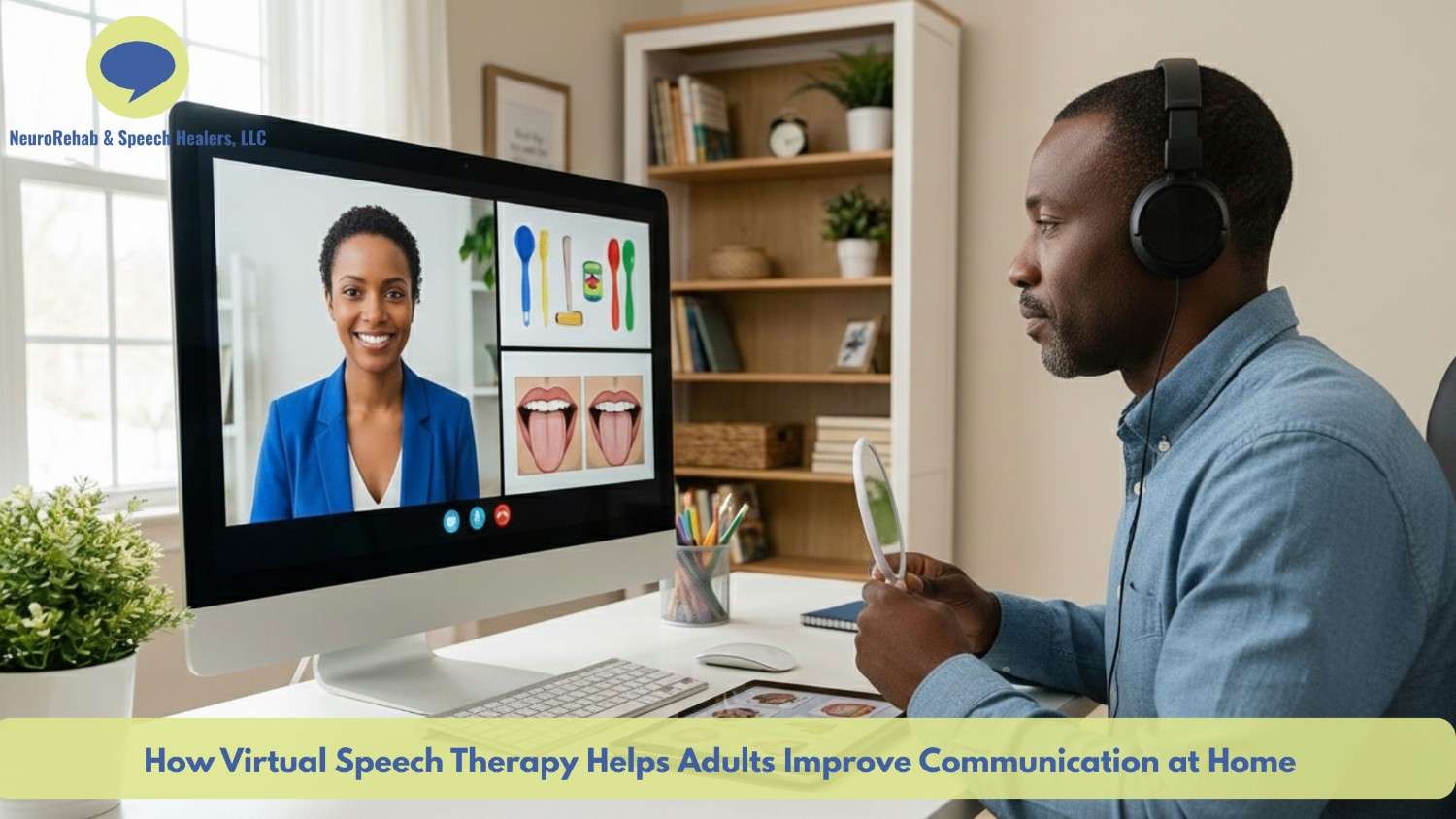
Virtual speech therapy, or telepractice, is the delivery of professional speech-language pathology services via secure, HIPAA-compliant video conferencing technology. This is not merely a video call, it is a structured clinical session led by a licensed Speech-Language Pathologist (SLP).
Adults typically seek virtual intervention for a variety of conditions, including:
While in-clinic therapy remains a traditional staple, virtual sessions offer a distinct advantage by allowing the therapist to observe and treat the patient within their natural living environment.
Extensive research indicates that virtual speech therapy is as effective as in-person treatment for a wide range of adult speech and language disorders. Major health organizations, including the American Speech-Language-Hearing Association (ASHA), recognize telepractice as a valid and effective service delivery model.
Adults often demonstrate high levels of engagement during virtual sessions for several reasons:
A typical online session mirrors the rigor of a clinical visit. It involves one-on-one interaction where the SLP utilizes digital tools, screen-sharing for cognitive exercises, and real-time phonetic modeling. Patients receive immediate feedback, and progress is tracked through standardized digital assessments.
To engage in virtual speech therapy, the technical requirements are minimal:
The primary challenge in adult rehabilitation is "carryover," the ability to use therapy techniques outside of the session. Virtual therapy bridges this gap effectively.
Online speech therapy offers several advantages, including:
Virtual speech therapy is well-suited for:
A professional evaluation helps determine if online therapy is the right fit.
Virtual therapy works best when:
In-person therapy may still be recommended for certain severe swallowing issues or cases requiring hands-on support. A licensed SLP can assess and recommend the most appropriate option.
The process typically includes:
Virtual speech therapy has transformed how adults access care. It is effective, accessible, and designed around real-life communication needs. With consistent therapy and professional guidance, adults can improve confidence, independence, and quality of life, without delaying care.
Seeking help early and staying consistent can make a meaningful difference in long-term communication success.
Don’t let communication struggles hold you back any longer. NeuroRehab & Speech Healers provides expert virtual speech therapy for adults across New York and New Jersey, focused on real conversations, not worksheets. Our compassionate team uses proven methods to help you regain clarity and independence, on your terms.
Take the first step, contact us or call us at (732) 743-8383 today and start speaking with confidence again.
Improvement timelines vary, but many adults notice measurable progress within weeks, depending on condition severity, session frequency, and consistent practice between appointments.
Coverage depends on diagnosis, provider credentials, and individual plans, with many insurance policies and Medicare offering telehealth speech therapy benefits.
Therapists provide simple guidance and support, making sessions easy to navigate, even for individuals with limited experience using digital devices.
Caregivers or family members may participate when appropriate, helping reinforce communication strategies and support practice during daily routines at home.
Virtual therapy can support many moderate to severe conditions, though individualized evaluations determine whether online, in-person, or combined approaches work best.