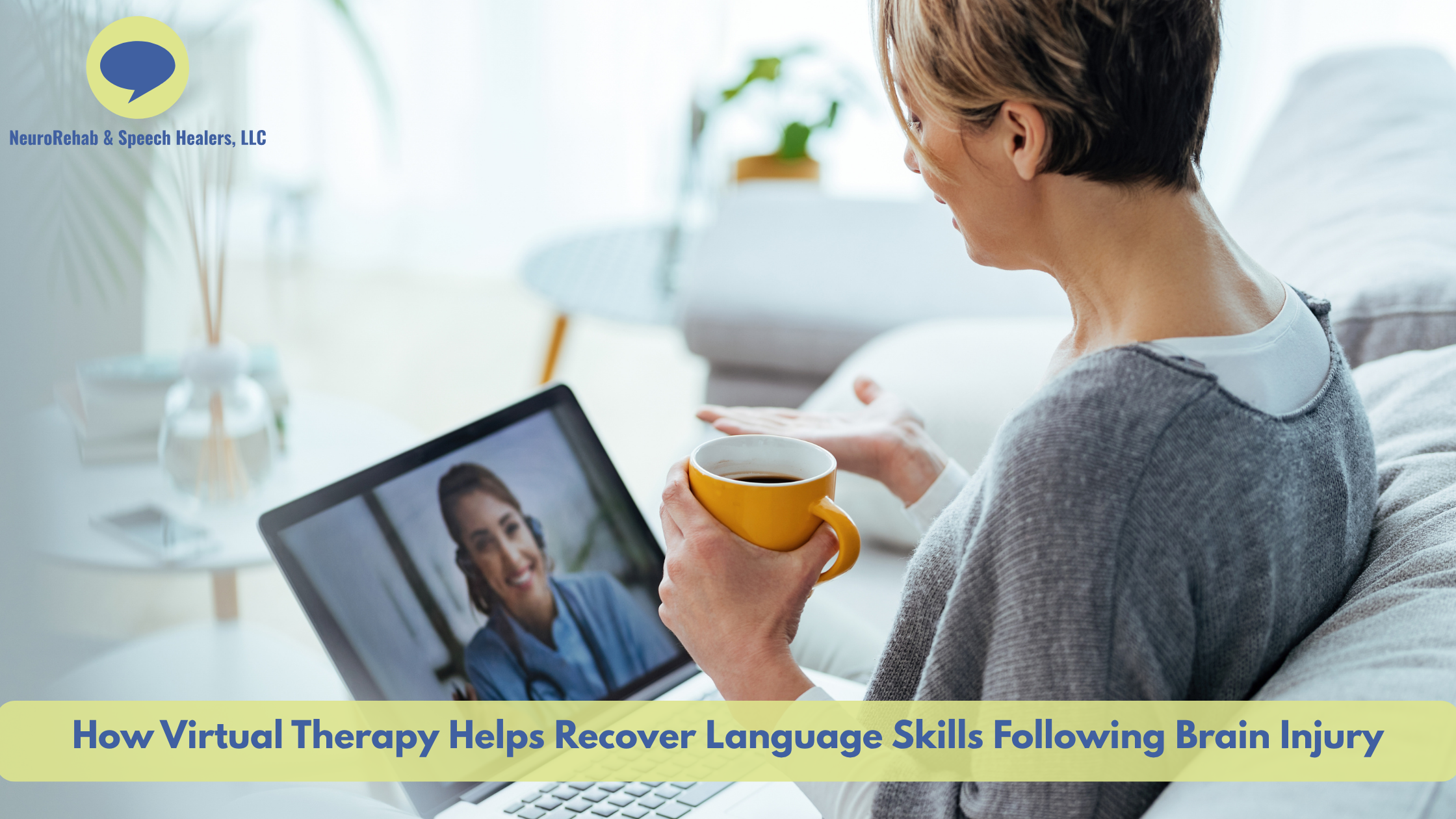
You don’t really think about language, until it doesn’t come easily anymore.
After a brain injury, something as simple as finishing a sentence, finding the right word, or following a conversation can suddenly feel frustratingly out of reach. It’s not just a “speech issue,” it affects confidence, relationships, and day-to-day independence.
This is where speech therapy after brain injury becomes essential. And more recently, virtual speech therapy has made that recovery process far more consistent, practical, and, honestly, less overwhelming.
Language isn’t controlled by just one part of the brain. It’s a network. So when an injury happens, the impact can show up in different, sometimes unexpected ways.
This is exactly why brain injury rehabilitation isn’t just physical, it’s deeply cognitive and communicative too.
Here’s the encouraging part: the brain can relearn.
Through something called neuroplasticity, your brain can build new pathways to replace damaged ones, but only with the right kind of repetition and guidance.
That’s what therapy does.
Not just “practice speaking,” but structured work to:
Let’s be honest, traditional therapy has a problem: consistency.
Travel, fatigue, scheduling, logistics, they all get in the way. And recovery needs repetition.
That’s where virtual speech therapy quietly changes the game.
Instead of missing sessions because getting to a clinic is too much, you can just log in.
That means:
And in brain injury rehabilitation, consistency is what drives results.
This is underrated.
When therapy happens at home:
It’s not just improvement in sessions, it shows up in real conversations.
This isn’t just worksheets on a screen.
Good virtual sessions include:
It keeps your brain actively engaged, not passively following instructions.
One of the biggest advantages of guided therapy (vs trying apps alone):
That level of personalization is what makes speech therapy after brain injury actually effective.
Sometimes the issue isn’t just speech, it’s thinking while communicating.
Cognitive-communication therapy targets things like:
Virtual therapy helps here by:
It’s not just about talking better, it’s about processing better.
Here’s what makes virtual speech therapy a valuable part of brain injury recovery:
Want better results from virtual therapy? Focus on consistency:
Don’t ignore these signs:
These aren’t things that just “fix themselves” reliably. Early support makes a real difference.
Recovering language after a brain injury isn’t linear, and it’s definitely not quick.
But with the right approach, it is possible.
Virtual speech therapy works because it fits into real life. It makes consistent practice easier, keeps therapy personalized, and helps rebuild communication in the environments where it actually matters.
And over time, that adds up to clearer speech, better conversations, and a lot more confidence.
Recovering language skills after a brain injury takes consistent practice and expert guidance. At NeuroRehab & Speech Therapy, our virtual speech therapy brings structured, personalized support into your daily environment, helping you improve communication where it matters most.
Start your recovery journey today, schedule your first session.
Virtual speech therapy is effective when done consistently. It offers structured exercises, real-time feedback, and regular practice for recovery.
Recovery time varies by injury severity and therapy consistency. Some improve in weeks, while others need months of therapy.
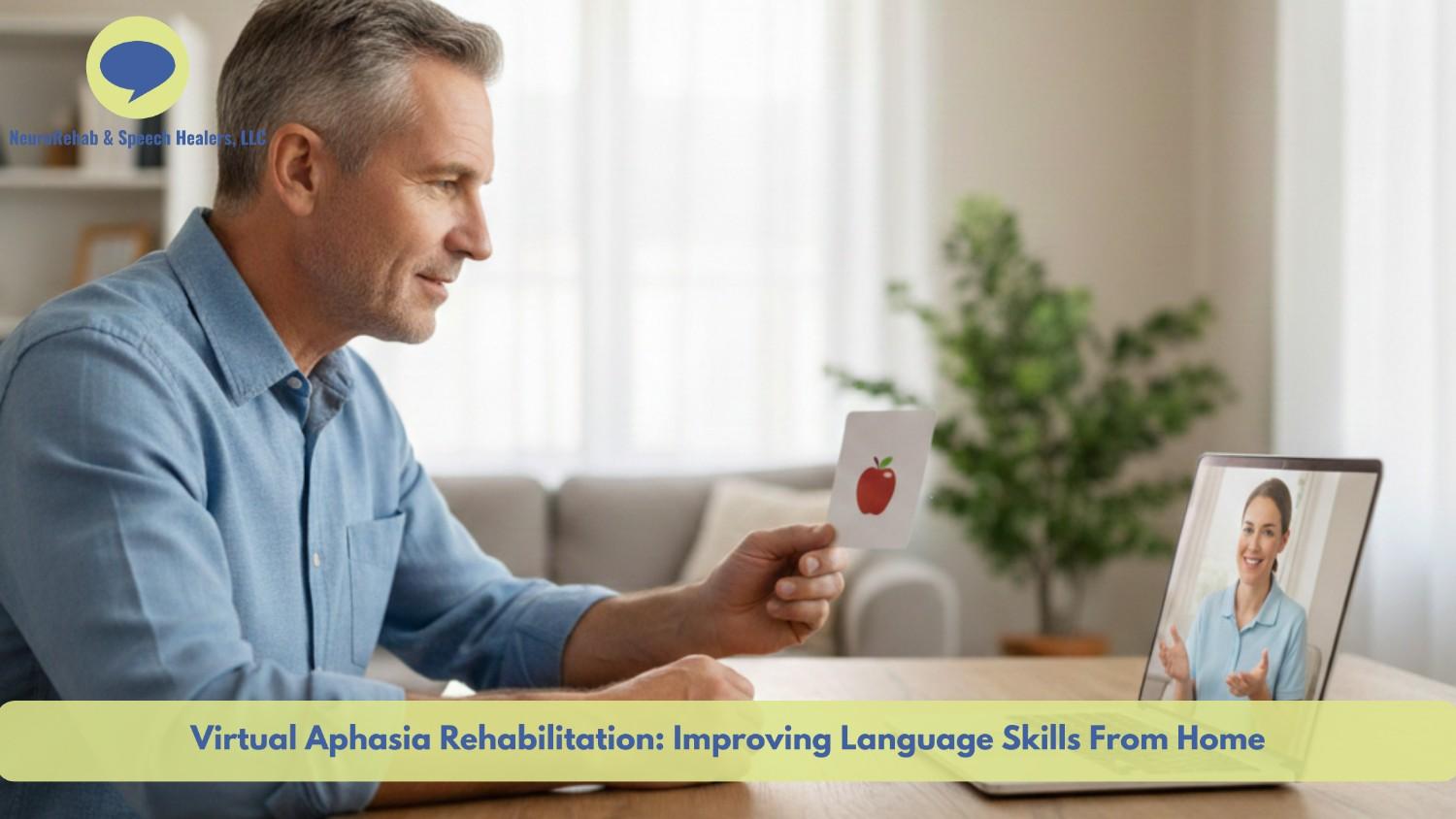
Virtual therapy helps aphasia by improving comprehension, expression, and communication strategies.
Speech therapy is needed after strokes, traumatic brain injuries (TBI), tumors, or neurological conditions affecting communication.
Anyone with speech, language, or cognitive communication difficulties, especially those preferring home-based care, can benefit.