We often take language for granted until the moment it becomes difficult to use. For adults experiencing language disorders, daily tasks like answering an email or following instructions can become overwhelming hurdles. While these challenges are significant, they are not permanent roadblocks. Thanks to advancements in communication therapy for adults, rebuilding these essential skills is more achievable than ever.
By leveraging telehealth therapy programs, patients can now receive personalized, expert care that bridges the gap between clinical excellence and the convenience of home-based recovery.
An adult language disorder occurs when a person has trouble understanding others (receptive language) or sharing thoughts, ideas, and feelings (expressive language).
It is important to distinguish between speech and language. While speech disorders involve the physical production of sounds, language disorders involve the processing and use of symbols, words, and sentences to convey meaning.
Common causes include:
Recognizing the signs is the first step toward improvement. If you or a loved one experiences the following, language therapy for adults may be beneficial:
You might know exactly what you want to say but find that the words are "stuck." This includes trouble forming full sentences or frequent "tip-of-the-tongue" moments where common words are forgotten.
This might manifest as difficulty following a story, struggling to understand jokes, or needing people to repeat themselves frequently. It can also affect reading comprehension.
When communication becomes difficult, many adults begin to withdraw from social settings or feel immense frustration at work. If your social life or career is shrinking because of communication barriers, it’s time to seek support.
The primary goal of communication therapy for adults isn't just "fixing" grammar, it's about functional recovery. Therapy is designed to:
Every therapy plan is personalized. A licensed therapist works with you to set goals that matter to your life, ensuring that every session brings you closer to independence.
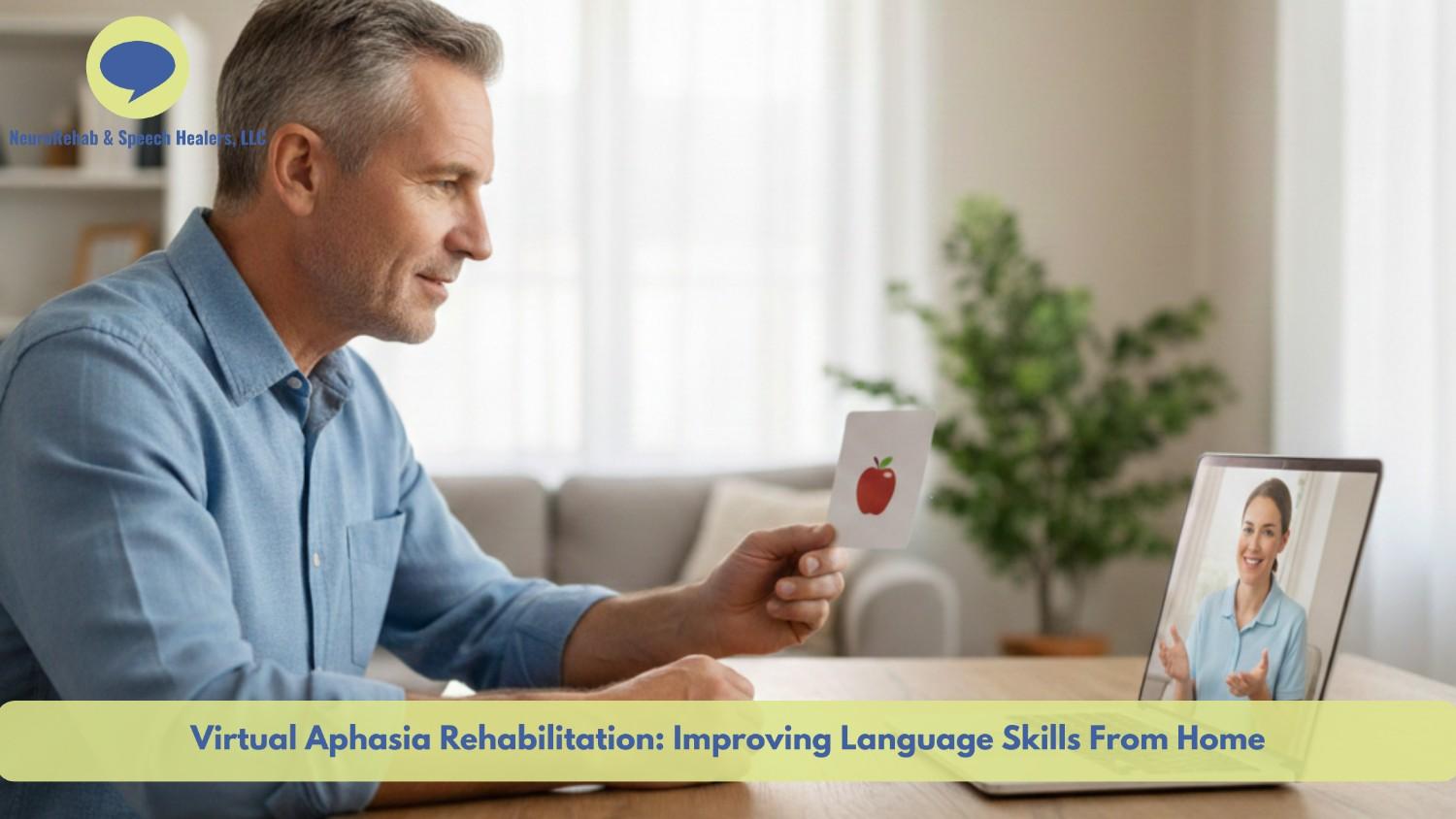
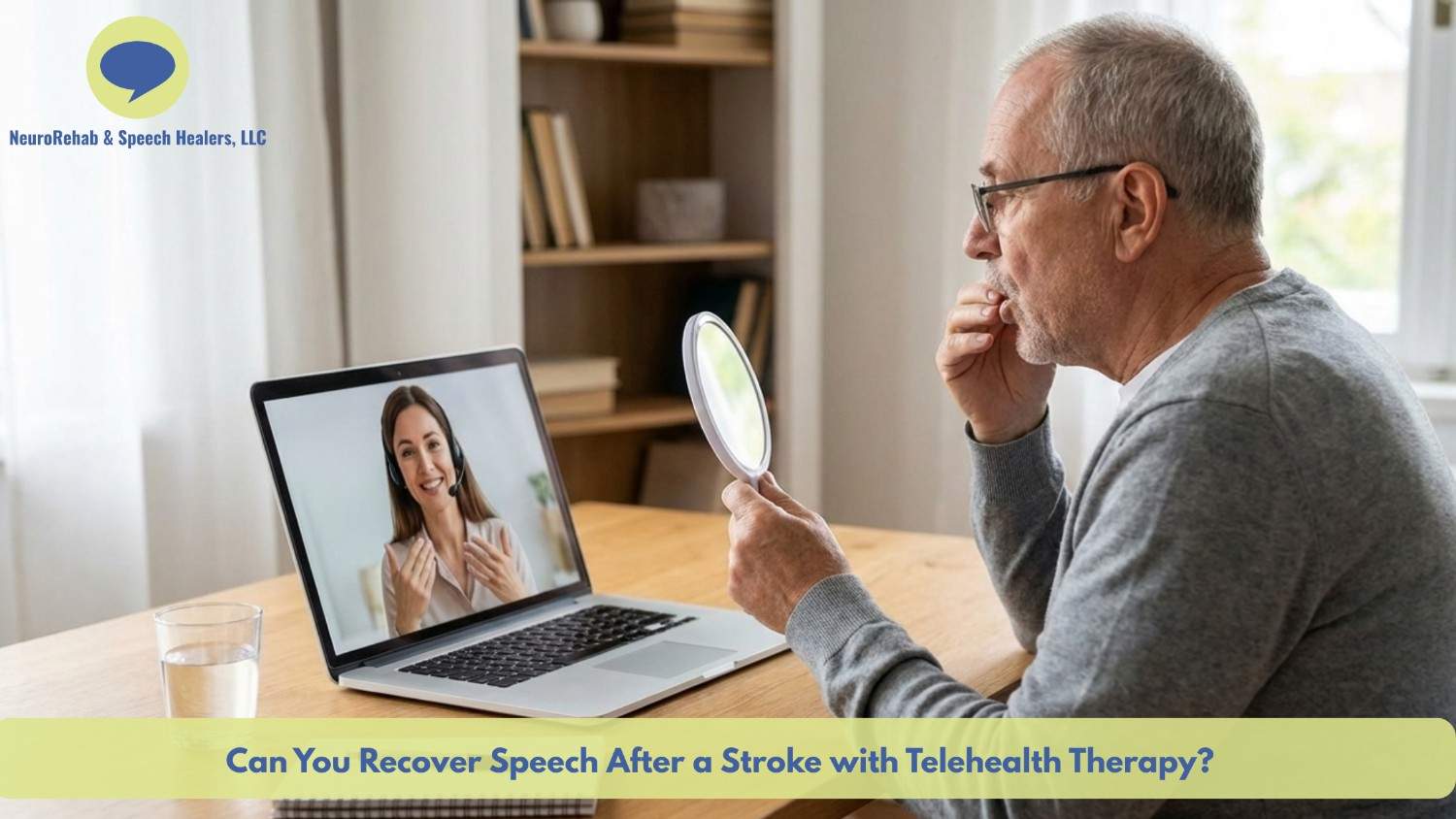
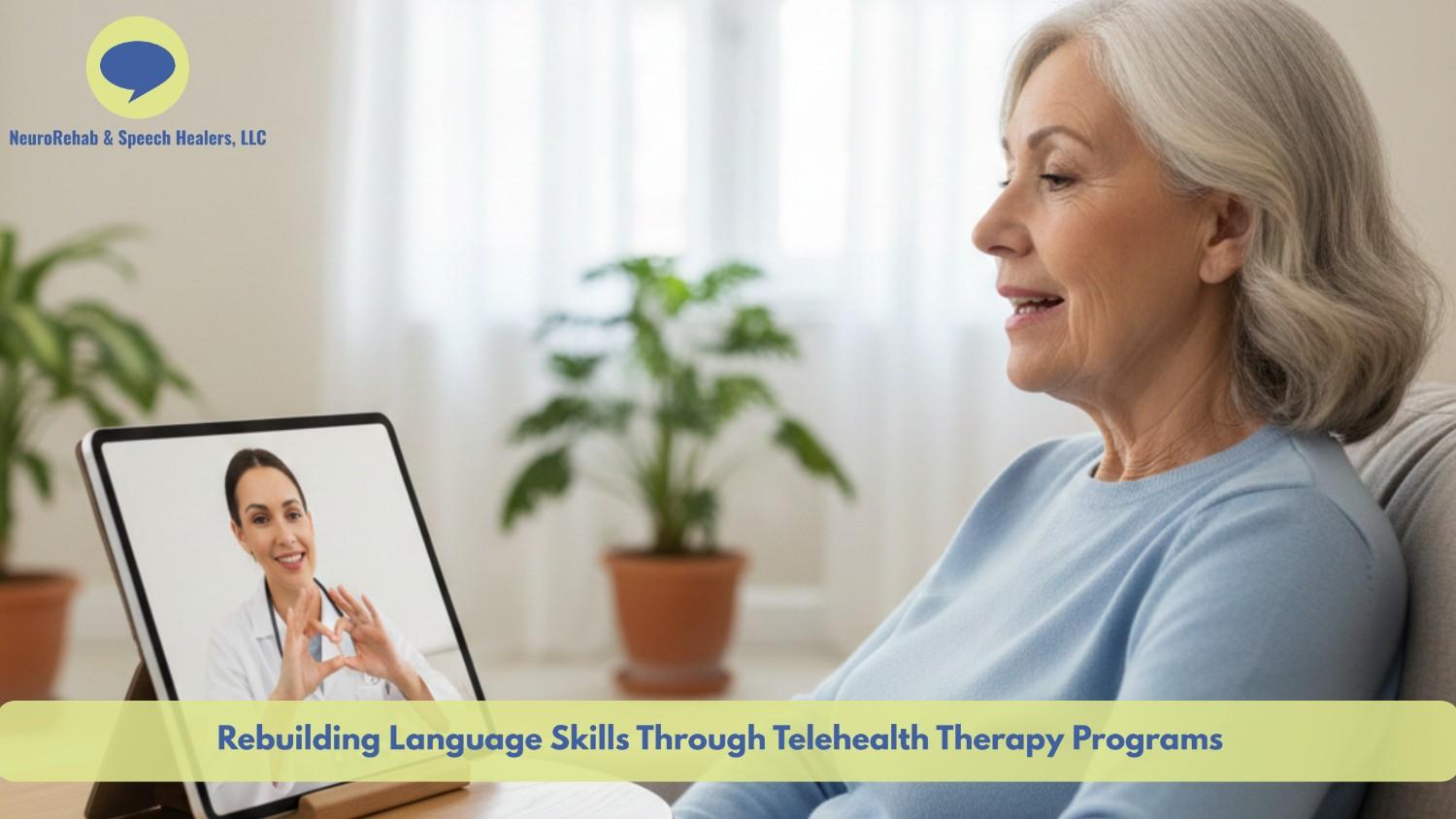
Telehealth has revolutionized how we approach language disorder therapy. Using secure, HIPAA-compliant video platforms, you connect with a specialist in real-time.
Adults have busy lives. Telehealth eliminates the stress of traffic, parking, and long commutes. You can schedule sessions during a lunch break or between daily errands.
Consistency is the "secret sauce" of neurological recovery. Because telehealth is so accessible, patients are less likely to miss appointments, leading to steadier progress.
Research shows that online language therapy is just as effective as in-person care. It allows for highly focused, one-on-one attention tailored to your specific neurological needs.
Telehealth is an excellent fit for:
Your journey begins with a comprehensive initial assessment. During this video call, the therapist will:
Language challenges can be difficult to manage, but they don’t have to be permanent. With the right guidance and support, adults can successfully rebuild language skills and regain confidence in communication.
Telehealth language therapy programs offer a flexible, effective way to improve language skills, strengthen communication, and enhance quality of life, all from the comfort of home. Taking the first step sooner can make a meaningful difference in long-term outcomes.
Communication challenges don’t have to define your day, or your future. At NeuroRehab & Speech Healers, we help adults rebuild language skills through personalized telehealth therapy designed for real conversations and real progress. Our experienced clinicians meet you where you are and guide you forward with care, clarity, and proven techniques.
Ready to take the next step? Call (732) 743-8383 or reach out today to start building stronger communication and renewed confidence, right from home.
Language disorder therapy helps adults improve understanding, expression, and communication skills affected by stroke, injury, or neurological conditions through structured, goal-based treatment.
Telehealth therapy supports language improvement through guided sessions, consistent practice, and personalized strategies that strengthen communication in everyday situations.
Online therapy uses secure video sessions, interactive exercises, and real-life communication tasks guided by licensed speech-language pathologists.
Adults experiencing speech or language difficulties from stroke, brain injury, neurological conditions, or ongoing communication challenges benefit most from therapy.
Telehealth therapy delivers evidence-based care comparable to in-person sessions, offering consistent support, measurable progress, and flexible access from home.