Concussions are often classified as mild brain injuries, but their effects can vary widely from person to person. Symptoms such as fatigue, headaches, and cognitive difficulties may persist, making recovery more complex than expected.
Recovery timelines vary, and symptoms can linger longer than expected. That’s where modern solutions like telehealth therapy are changing the game, making it easier to access expert care without adding stress to your recovery.
A concussion is a mild traumatic brain injury that temporarily affects how your brain functions. Even though it’s considered “mild,” the impact on daily life can feel anything but.
Common symptoms include:
One important thing to remember: no two recoveries are the same. While some people feel better quickly, others may take weeks or even months to fully recover.
Understanding the concussion recovery timeline can help you set realistic expectations:
Your timeline depends on factors like age, severity of injury, and how well you follow recovery guidelines.
If you’re wondering how to recover from a concussion, the focus should always be on gradual, guided healing.
Key steps include:
Trying to rush recovery can prolong symptoms, patience and consistency are essential.
When symptoms persist, post-concussion rehabilitation becomes an important part of recovery. This process is designed to restore normal brain function and help you regain independence.
Rehabilitation may include:
This type of care is especially valuable for individuals experiencing prolonged symptoms.
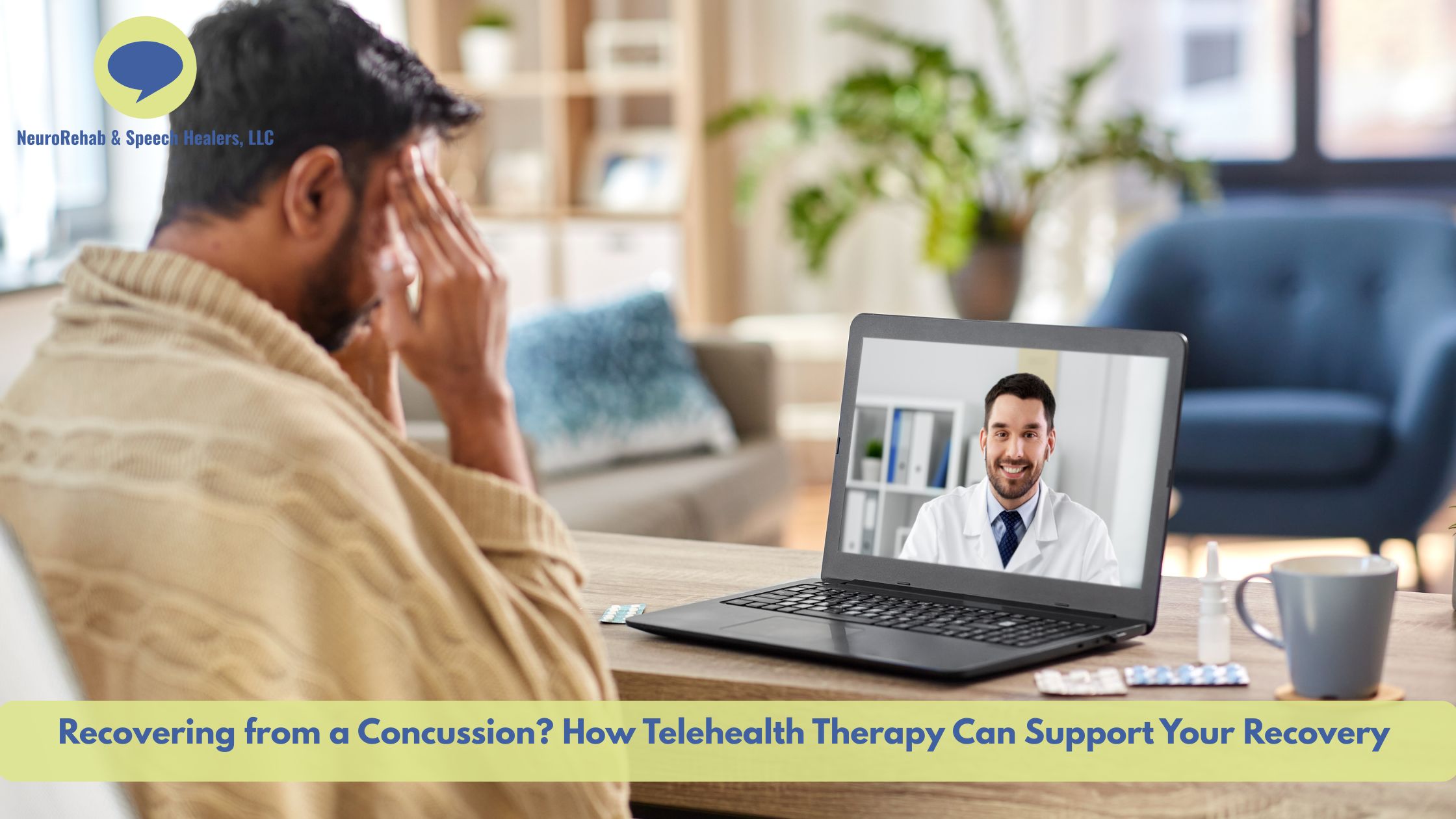
With telehealth concussion care, you can connect with experienced therapists without leaving your home, ideal when movement or travel worsens symptoms.
Your recovery plan is tailored to your symptoms, lifestyle, and progress, ensuring targeted and effective care.
Regular virtual check-ins allow providers to track your improvement and adjust therapy as needed.
Recovering in a familiar, comfortable environment can reduce stress, which plays a key role in healing.
Different therapies address different aspects of recovery. A comprehensive plan may include:
Combining these therapies often leads to better outcomes.
Telehealth therapy can be especially beneficial for:
If you’re unsure whether to seek care, watch for these signs:
Early intervention can prevent long-term complications.
Recovery from a concussion is rarely linear, and waiting it out can often delay progress. The difference lies in timely, guided care that responds to your symptoms as they change. Telehealth therapy makes that possible, offering consistent, personalized support without added strain, so you can recover with greater stability, fewer setbacks, and a clearer path back to your routine.
Recovering from a concussion can be frustrating when symptoms linger or change without warning. At NeuroRehab & Speech Therapy, our telehealth sessions provide structured, symptom-focused care that adapts as you recover, so you’re not left managing it on your own.
With guided therapy, regular monitoring, and support that fits into your routine, you can reduce disruptions and make steady, measurable progress. Contact us today and bring consistency to your recovery.
Most people recover within a few days to a few weeks, but some may experience symptoms for months, especially in cases of post-concussion syndrome.
Yes, telehealth provides access to specialists, personalized therapy plans, and regular monitoring, making recovery more convenient and consistent.
It depends on your symptoms. Cognitive therapy, vestibular therapy, speech therapy, and occupational therapy are commonly used.
You should seek medical care if symptoms worsen, last longer than a couple of weeks, or interfere with daily activities.
Persistent headaches, dizziness, memory issues, and difficulty concentrating lasting for weeks or months after the injury are common signs.