Aphasia is a language disorder that affects a person’s ability to communicate. It often appears after a stroke, brain injury, or certain neurological conditions, making speaking, understanding, reading, or writing challenging.
Teletherapy for aphasia, also known as online aphasia therapy, offers a convenient and effective way to access professional speech therapy from home. With guided practice, interactive exercises, and personalized care, teletherapy supports long-term language recovery and helps individuals regain confidence in daily communication.
Find out how teletherapy ensures regular, evidence-based speech therapy for aphasia patients at home.
What Is Aphasia and How Does It Affect Communication?
Aphasia does not affect intelligence, but it disrupts the brain’s language centers. The severity and type of aphasia vary depending on the area and extent of brain injury.
Common Causes of Aphasia
- Stroke: The most frequent cause, particularly when it affects the left hemisphere of the brain
- Traumatic brain injury: Accidents or impacts that damage language-related areas
- Neurological conditions: Brain tumors, infections, or degenerative disorders
Communication Challenges
- Speaking: Difficulty finding words or forming sentences
- Understanding: Trouble following conversations or instructions
- Reading: Challenges in interpreting written text
- Writing: Difficulty expressing ideas clearly on paper
Because aphasia manifests differently in each person, speech therapy for aphasia is highly personalized, focusing on individual strengths, needs, and recovery goals.
What Is Teletherapy for Aphasia?
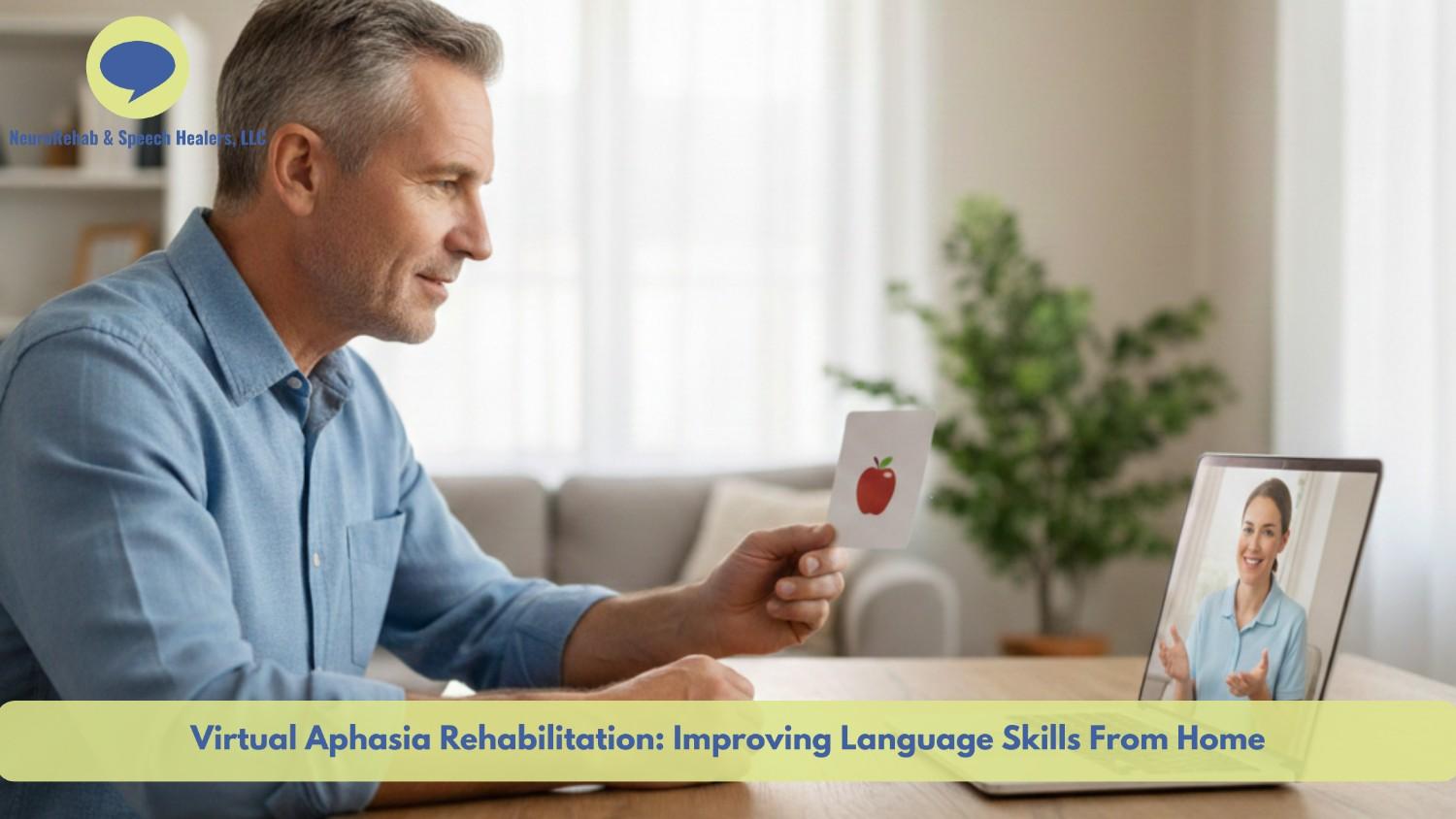
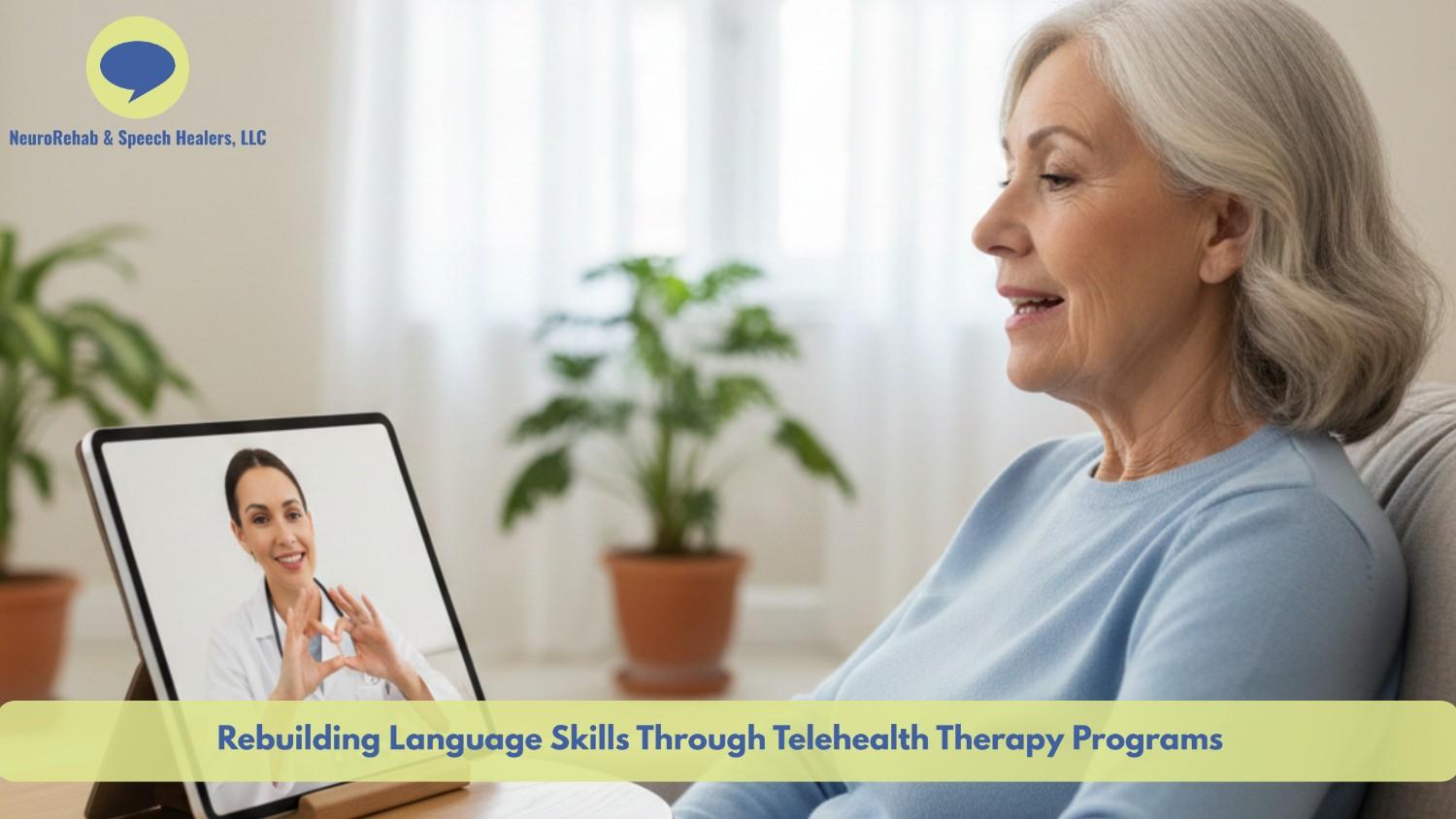
Teletherapy for aphasia provides speech-language therapy through secure online platforms. Licensed speech-language pathologists guide patients through exercises and activities using video conferencing tools.
How Online Aphasia Therapy Works
- Live, interactive sessions with a licensed speech therapist
- Exercises designed to improve speaking, comprehension, reading, and writing
- Immediate feedback and adjustment of exercises based on progress
Teletherapy vs. In-Person Therapy
While in-person therapy has long been the standard, teletherapy provides the same evidence-based care with added convenience. Patients can maintain therapy consistently, even if they face mobility, transportation, or scheduling challenges.
Why Teletherapy Is a Preferred Option
Teletherapy is increasingly chosen for aphasia rehabilitation due to its flexibility and accessibility:
- Consistent Access to Therapy: Regular sessions are essential for recovery, and teletherapy helps reduce missed appointments.
- Convenience: Therapy is accessible from home, eliminating transportation or mobility barriers.
- Continuity of Care: Teletherapy ensures a smooth transition from hospital-based or clinic therapy to home-based rehabilitation.
- Specialist Access: Patients can connect with experienced aphasia therapists even if there are no local specialists nearby.
How Technology Supports Aphasia Rehabilitation
Technology enhances therapy in ways that make it both effective and engaging.
Real-Time Speech and Language Practice
Teletherapy uses interactive exercises to practice:
- Word retrieval and sentence construction
- Comprehension and following instructions
- Reading and writing tasks: Immediate feedback from a licensed therapist helps correct errors and reinforce correct language use.
Personalized Therapy Plans
Therapists design sessions based on:
- Aphasia type and severity
- Communication goals (e.g., improving conversational speech, reading comprehension, or writing skills)
- Progress tracking and adaptation of activities over time
Visual and Digital Tools
Therapy often includes:
- On-screen prompts and visual cues
- Structured exercises with text, images, and audio
- Adaptive exercises tailored to the patient’s pace and learning style
Family and Caregiver Involvement
Teletherapy allows caregivers to:
- Observe sessions and learn supportive strategies
- Assist with home practice and reinforce communication skills
- Help maintain consistency and carryover into daily life
Benefits of Teletherapy for Aphasia
Here are the key benefits patients can experience with online aphasia therapy:
- Consistent Access to Speech Therapy: Regular, uninterrupted sessions promote steady progress. Teletherapy reduces barriers such as travel time or scheduling conflicts.
- Therapy in a Comfortable Environment: Practicing at home helps patients feel relaxed, reduces stress, and allows therapy to focus on real-life communication situations.
- Access to Specialized Therapists: Teletherapy removes geographic limitations, giving patients access to therapists experienced in aphasia, including advanced techniques like constraint-induced language therapy or computer-assisted exercises.
- Flexible Scheduling: Sessions can often be scheduled around work, family, or medical appointments, making it easier to maintain consistent therapy.
Evidence and Effectiveness of Teletherapy
Research indicates that teletherapy for aphasia is effective for many patients. Studies have shown:
- Online therapy can produce improvements in speech, language comprehension, reading, and writing similar to in-person sessions
- Remote therapy is effective for both mild and moderate aphasia
- Patient engagement and caregiver involvement improve outcomes
Success depends on using evidence-based methods under the guidance of a licensed speech-language pathologist. Teletherapy is most effective when combined with home practice and regular progress monitoring.
Who Is a Good Candidate for Teletherapy?
- Individuals with mild to moderate aphasia
- Patients with stable internet access and basic technology skills
- People who can benefit from caregiver support during sessions
- Those committed to consistent practice and long-term recovery
A professional evaluation determines if teletherapy is the best fit for each patient.
How to Get Started With Speech Therapy for Aphasia
Follow these steps to begin effective, personalized online speech therapy for aphasia:
- Initial Evaluation: A licensed speech-language pathologist assesses communication abilities, aphasia type, and severity.
- Technology Requirements: A computer, tablet, or smartphone with a reliable internet connection is needed.
- Setting Therapy Goals: Goals are personalized and measurable, focusing on functional communication skills.
- Begin Sessions: Patients engage in structured, interactive exercises with professional guidance, gradually improving language abilities.
Effective Online Therapy for Aphasia!
Teletherapy for aphasia makes professional speech therapy accessible, convenient, and tailored to each individual’s needs. By combining expert guidance, interactive exercises, and caregiver support, online therapy helps patients regain language skills steadily and confidently. Starting teletherapy is the first step toward consistent progress, improved communication, and greater independence in everyday life.
Regain Language Confidence with NeuroRehab & Speech Therapy in New York & New Jersey
Aphasia doesn’t have to limit your daily communication. At NeuroRehab & Speech Therapy, our licensed specialists provide online speech therapy tailored to your needs, helping you rebuild language skills and regain confidence in everyday conversations.
Take action today, contact us or call (732) 743-8383 to schedule your first session.
FAQs
Is teletherapy effective for aphasia rehabilitation?
Teletherapy delivers evidence-based, personalized speech therapy remotely, allowing patients to practice language skills consistently under professional guidance, supporting measurable improvements in communication over time.
What types of aphasia can be treated with online aphasia therapy?
Online aphasia therapy can address expressive, receptive, and mixed forms, tailoring exercises to each patient’s severity and communication needs for optimal recovery outcomes.
How does speech therapy for aphasia work through teletherapy?
Therapists conduct live video sessions with interactive exercises, providing real-time feedback, structured practice, and guidance while adapting activities based on patient progress.
Who is a good candidate for teletherapy for aphasia?
Individuals with mild to moderate aphasia, stable internet access, and motivation to engage in regular sessions benefit most from remote speech therapy.
Can caregivers participate in online aphasia therapy sessions?
Caregivers can observe sessions, reinforce strategies at home, and support practice, helping ensure better skill carryover and consistent language improvement.