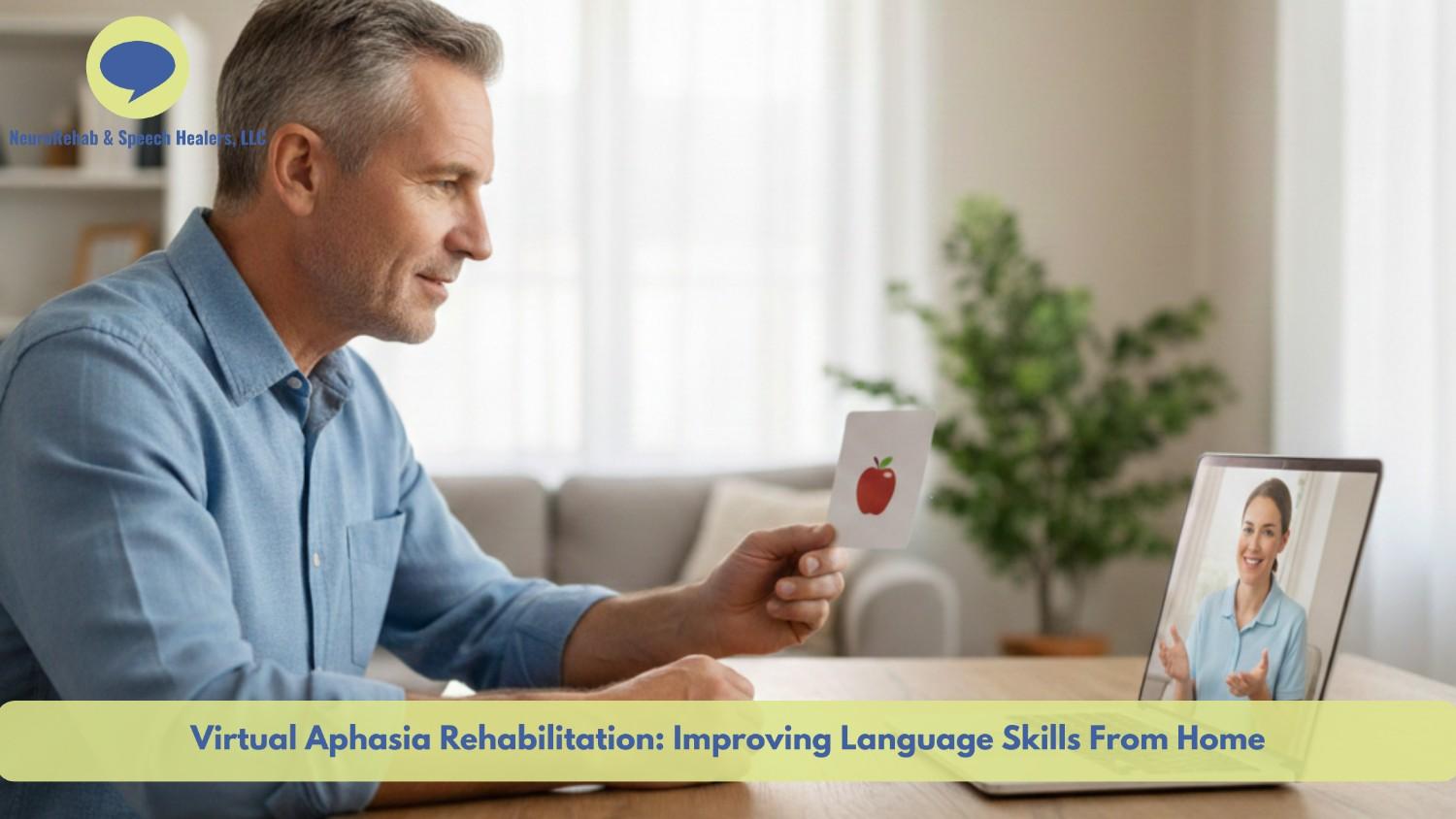
Aphasia affects a person’s ability to communicate, often following a stroke, brain injury, or neurological condition. For adults, this change can be frustrating and isolating, especially when thoughts remain clear, but words are difficult to express or understand.
Consistent speech therapy for adults is essential for recovery, yet many individuals face barriers such as transportation challenges, fatigue, caregiver availability, or limited local services. These obstacles can interrupt therapy and slow progress.
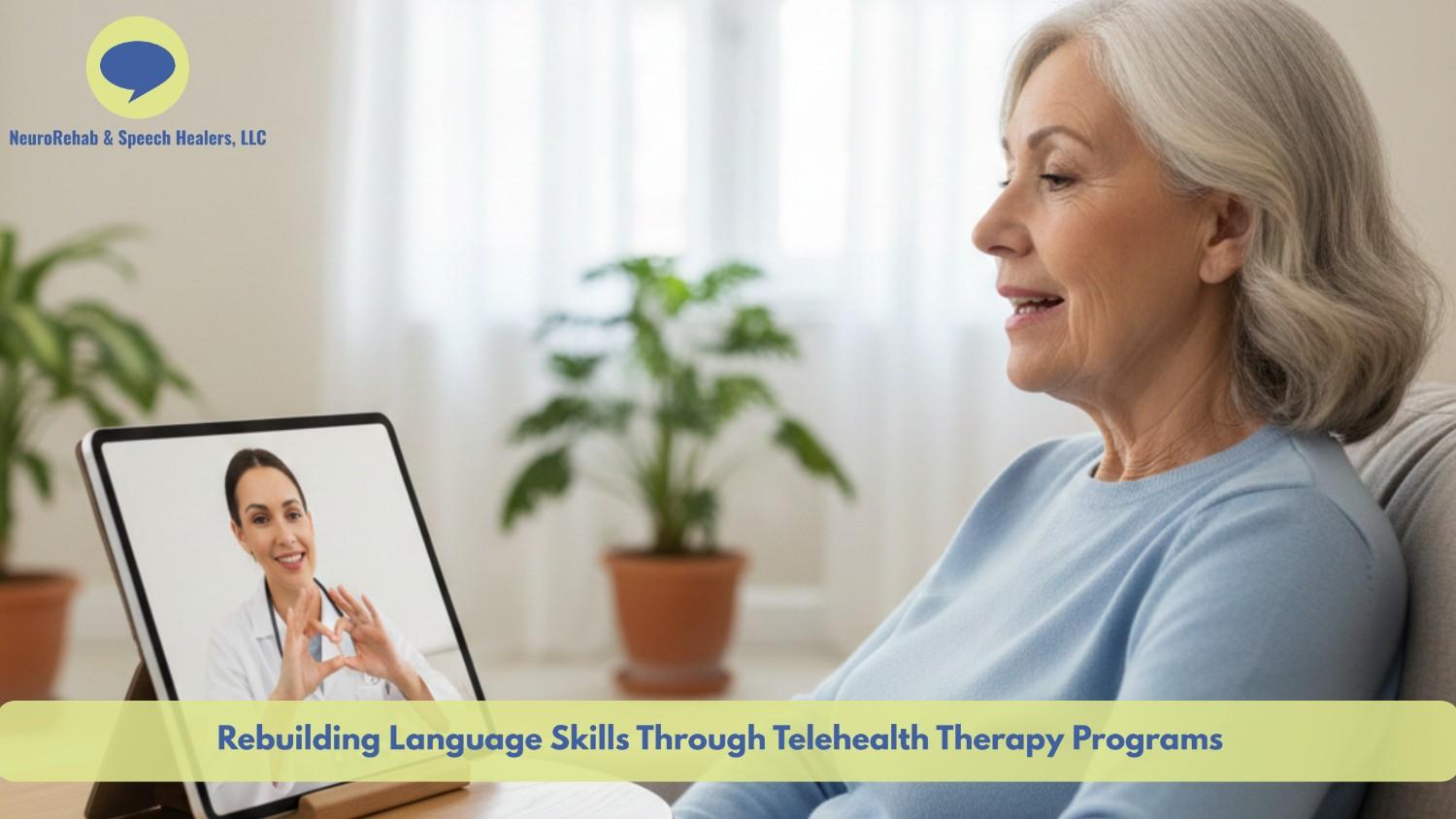
Virtual aphasia rehabilitation offers a practical solution. Through online aphasia therapy, adults can receive structured, professional care from home while continuing to work toward meaningful communication goals.
Language recovery relies on the brain’s ability to adapt and relearn through repetition and guided practice. Speech therapy for adults provides this structure, helping rebuild connections needed for speaking, understanding, reading, and writing.
Regular therapy sessions support steady improvement and help prevent setbacks. When therapy is delayed or inconsistent, adults may develop workarounds that limit long-term progress or avoid communication altogether.
With consistent support, therapy becomes more than an exercise; it becomes a pathway back to confidence and independence.
Online aphasia therapy delivers speech therapy through secure telehealth platforms. Adults work one-on-one with licensed speech-language pathologists who specialize in aphasia and adult communication disorders.
Sessions follow evidence-based approaches similar to in-person care. Therapists guide exercises, observe responses, and adjust strategies in real time. The difference is simply where therapy happens, not the quality of care.
Receiving therapy at home can make a noticeable difference. Many adults feel more relaxed and willing to participate when practicing in a familiar environment.
Virtual aphasia rehabilitation also reduces physical and mental strain, especially for those with mobility challenges or medical fatigue. Scheduling becomes easier for caregivers and families, making it more likely that therapy stays consistent over time.
Online aphasia therapy includes a range of adult speech therapy exercises designed to strengthen communication skills, such as:
These exercises focus on real-world communication, helping adults apply skills beyond the therapy session.
No two cases of aphasia are the same. Virtual aphasia rehabilitation begins with an evaluation to understand each individual’s language strengths, challenges, and goals.
Therapy plans are adjusted as progress develops. Exercises evolve to remain challenging and relevant, while ongoing assessments help track improvement and guide next steps.
Caregivers play an important supportive role in online aphasia therapy. They may assist with technology, observe sessions, or help encourage practice between visits.
Therapists often share strategies caregivers can use at home to support communication without creating pressure. This teamwork helps reinforce progress and improve everyday interactions.
Research supports telehealth as an effective option for speech therapy when delivered consistently. Engagement, repetition, and professional guidance remain the most important factors for success.
While some adults may benefit from in-person or hybrid therapy models, many achieve meaningful improvement through online aphasia therapy alone. A speech-language pathologist can help determine the most appropriate approach.
Online aphasia therapy may be a strong fit for:
An evaluation with a licensed professional can help determine suitability.
Virtual aphasia rehabilitation removes many of the barriers that interfere with consistent speech therapy, allowing adults to focus on steady, meaningful progress. With professional guidance, personalized exercises, and the comfort of home, individuals can continue rebuilding communication skills, confidence, and independence, one conversation, one connection, and one step forward at a time.
Aphasia recovery deserves consistent, specialized care that adapts to real life. NeuroRehab & Speech Healers offers structured virtual aphasia rehabilitation designed to support meaningful language improvement from home. With personalized therapy and professional guidance, adults can continue strengthening communication skills while maintaining comfort, continuity, and confidence throughout the recovery process.
Access consistent, home-based aphasia therapy, connect with us or call (732) 743-8383 to begin.
Progress depends on factors such as aphasia severity, therapy consistency, and individual learning pace. Many adults begin noticing gradual improvements within weeks of regular, guided sessions.
Language recovery can continue well beyond the initial stroke period. Targeted online aphasia therapy helps adults strengthen communication skills through focused practice and functional language use.
Virtual therapy platforms are designed to be user-friendly, and therapists provide step-by-step support to help older adults participate confidently and comfortably.
Therapists typically share customized exercises, digital resources, and structured home practice activities to reinforce progress between sessions.
Therapy focuses on practical communication strategies that directly support everyday conversations, social interactions, and daily communication tasks.